

Any forward-looking event that might have a material impact on the business needs to be disclosed in writing for the shareholders and stakeholders. Items like outstanding lawsuits, union matters, competition, environmental issues, pending changes in laws, insurance claims and more. Anything that may have a negative effect on future stability and earnings for the business must be disclosed. Many, many items are treated the same as toilet paper in the hotel business simply because these were not deemed as material.
Together, they help you create more meaningful income statements, making sure costs aren’t just recorded when they happen, but also in the same period as the revenues they help you earn. The revenue recognition principle is another accounting principle related to the matching principle. It requires reporting revenue and recording it during realization and earning. In other words, businesses don’t have to wait to receive cash from customers to record the revenue from sales.

If instead, you recognize expenses too early or what is the matching principle in accounting too late, you could distort your net income in two periods—artificially inflating profits in one while understating them in another. Imagine that a company pays its employees an annual bonus for their work during the fiscal year. The policy is to pay 5% of revenues generated over the year, which is paid out in February of the following year. Shaun Conrad is a Certified Public Accountant and CPA exam expert with a passion for teaching.

David Lund is The Hotel Financial Coach, an international hospitality financial leadership pioneer. He has held positions as a Regional Financial Controller, Corporate Director and Hotel Manager with Fairmont Hotels for over 30 years. This principle dictates that—unless a sole proprietor—the assets of the business and any rights to use these assets are separate and distinct. They connect the everyday activities to the business of hotels so leaders can understand why we do what we do a certain way. For many non-financial leaders, this is the key to dropping their resistance to getting on board with their numbers.
Whether it’s recognizing depreciation, allocating commissions, or accounting for marketing costs, this principle ensures every dollar of revenue is properly matched to its related expenses. There are situations in which using the matching principle can be a disadvantage. It requires additional accountant effort to record accruals to shift expenses across reporting periods. Doing so is moderately complex, making it difficult for smaller businesses without accountants to use. For example, it can be difficult to determine the impact of ongoing marketing expenditures on sales, so it is customary to charge marketing expenditures to expense as incurred.

When running a marketing campaign, a company incurs upfront expenses for advertising, promotions, and creative development. However, the revenue generated from the campaign may be realized Balancing off Accounts over an extended period as customers gradually respond to the marketing efforts and make purchases. This delay makes it difficult to accurately align the timing of expenses with the corresponding revenue.
They ensure accurate financial reporting by recognizing revenue in the period it’s earned and linking expenses to the revenues it generates. The matching principle of accounting dictates that expenses should be recognized in the same period as the corresponding revenue they generate. Have you ever wondered how companies manage large expenditures to maintain a healthy balance sheet? Understanding the concept of capitalizing costs is essential for grasping how businesses strategically allocate their resources. By recording certain expenditures as assets rather than immediate expenses, companies can ensure a clearer financial picture and align https://cffeed.com/exempt-purposes-internal-revenue-code-section/ costs with the revenue generated from those assets. Adherence to the matching principle is not just good practice, it’s a requirement for all public companies under GAAP.

The differences are nuanced (opt-out vs mandatory IOLTA, how you report to the bar, etc.). Always check another jurisdiction’s specific rules if you practice across lines, but you’ll find Wyoming’s framework is firmly within the national mainstream for trust accounting. With years of experience working with law firms, we understand the nuances of legal accounting, from matter-based financials to regulatory compliance. Even minor errors in financial records can lead to significant problems during audits and reconciliations.
Firms previously permitted are free to activate an expired permit as long as the firm ownership and type of business (partnership, corporation, limited liability company) have not changed. Roger has assisted clients in a wide range of businesses and financial activities since graduating from the University of Wyoming in 1970. Dick is a licensed CPA in the state of Wyoming and also a licensed CVA (Certified Valuation Analyst). We work with small businesses to ensure your success, offering comprehensive assistance with tax preparation, bookkeeping, payroll, and more.
Efficient payroll processing and reporting to ensure your team is paid correctly and on time. Yes, our database includes firm size information so you can target solo practitioners, small firms, or larger practices. We believe that real compliance is built on human https://canvomagazine.com/how-bookkeeping-for-law-firms-strengthens-financial-health/ understanding — not just algorithms.
This helps us maintain close and open relationships with each of our clients, while providing the highest level of personalized services tailored to each client’s or business’s needs. These law firm accounting solutions protect multi-office firms from financial risk and compliance issues. This makes outsourced law firm accounting a cost-effective solution for multi-office firms.

Having too many accounts creates headaches later on, as it takes more time to review the books and increases your chances of making mistakes. Fortunately, with a combination of technology, best practices, and the right help, it’s possible to stay on top of your bookkeeping with little effort. The magic happens when our intuitive software and real, human support come together. Book a demo today to see what running your business is like with Bench. Laura is a California native, moving to Wyoming in The Primary Aspects of Bookkeeping for Law Firms 2015 she now calls Wyoming home.
Always talk to your banker about the best setup – they often have products for attorney trust accounts. And don’t hesitate to contact the Wyoming Bar or EJW Foundation for guidance; they can send you the necessary forms and instructions. Also, be sure your trust account is named appropriately at the bank. The Wyoming State Bar’s handbook emphasizes the account should be clearly labeled as a “Trust Account” or “IOLTA Account” under the law firm’s name, so it’s unmistakable. This helps avoid confusion and signals to bank staff and others the special nature of the account. As lawyers, we didn’t want to focus on the day-to-day of our firm’s accounting.
We also help manage partner distributions, shared firm costs, and firm-wide profitability analysis, providing the strategic financial insights your growing practice needs. Law firm accounting solutions include services like trust accounting, billing, payroll, financial reporting, and compliance support. Small businesses need bookkeeping services to ensure accurate and up-to-date financial records. This is essential for making informed business decisions, preparing tax returns, and meeting financial reporting requirements. When pressed for time, it’s tempting to let recordkeeping fall by the wayside.

Keeping client funds separate ensures the money isn’t inadvertently used for your business or personal expenses. You can add as many accounts to your chart of accounts as you need to prepare accurate and informative financial statements, but don’t let your chart of accounts get too unwieldy. In cash basis accounting, you record income and expenses when money changes hands. In accrual accounting, you record revenue when earned and expenses when incurred, regardless of when cash changes hands. If the firm provides services which requires licensure, each firm is required to designate a certificate holder of some state to be responsible for the proper registration of the firm. The firm must identify the responsible CPA and provide contact information, including an email address, for that person.

Wyoming doesn’t require you to submit reconciliations to the Bar, but you must keep the records on file in case of any audit or inquiry. If math isn’t your strong suit, delegate this task to a bookkeeper or use technology – just don’t skip it. Regular reconciliation is your best defense against both unintentional errors and intentional fraud. Whenever you disburse, document the purpose and recipient in your records, and notify the client. Wyoming’s rules require delivering funds the client is entitled to and, on request, an accounting. It’s good practice to always include a simple accounting when you disburse client funds.

In the US, a midsized business employs at least 100 and 999 people and generates annual revenue ranging from $10 million to $1 billion. They reflect a distinct operational reality where companies have outgrown startup constraints but haven’t yet reached enterprise scale. “We love the ease of dealing with the Auctus team from digital platforms to payment systems – its easy.” Being able to identify blind spots can minimise risk to your business Running a small business means juggling a lot, from clients to cash flow, operations to strategy, so it’s…
Through his thoughtful approach, Your Name reminded us that while tools and trends may change, understanding your audience and delivering value remain at the heart of every successful strategy. Albert Feng’s journey from a history buff to a disruptor in the finance industry offers valuable insights on entrepreneurship, innovation, and perseverance. Learn how he and his team at Archainify are reshaping asset management with decentralized systems. Optimizing accounts receivables is not just about improving cash flow but also about building stronger client relationships and enhancing financial performance.
Midsize organizations often handle multi-entity operations, higher transaction volumes, and stricter compliance requirements. These factors create unique accounting needs, such as advanced reporting, automated workflows, and integrations with other financial technology. Most smaller businesses can make do with basic functions like invoicing, bank medium business accounting reconciliation, income and expense tracking and financial report generation. Starting your own business might be a dream come true, the realisation of a great idea, or the result of a good savings plan. What you do next will determine the success and growth of your small business.
As customers, products, revenues and sales channels increase, you’ll require additional functionality. Take the time to carefully evaluate https://masdar.cloud/trucking-software-for-owner-operators-1-tms/ your options, invest in the best solutions for your needs, and continuously iterate and improve your processes. By integrating Link My Books, you can automate the process of importing your sales data, fees, taxes, and other transaction details directly into your accounting system. This eliminates the need for manual data entry, saving you time and reducing the risk of errors. Link My Books ensures that your financial data is accurate, up-to-date, and synchronized across all your sales channels and accounting platforms.
If your accounting team has only three people, rotate responsibilities periodically and ensure the owner or CFO reviews key transactions. By being aware of these pitfalls, you can take proactive steps to avoid them. Do your homework on both your needs and the software, keep future requirements in mind, involve your team, and don’t rush the process.
Common challenges include maintaining consistent financial data across locations, ensuring compliance with multi-state or international tax laws, and reconciling hundreds or thousands of transactions each month. To help you decide, we’ve looked at the best UK mid-sized business accounting software packages on the market. The package also includes all the necessary taxes you need to comply with the government’s regulations. All Value-added taxes, Withholding, Balancing off Accounts Stamp, and Schedule taxes are captured in transactions, recorded on the correct accounts, and reflected in their corresponding tax reports. Odoo is fully integrated into the Egypt Tax Authority portal, where invoices can be sent to the ETA portal with a click of a button!
Tipalti gives you a choice of payment methods (if available in a payee’s country). You can opt to apply for (and receive upon approval) a Tipalti Card, a virtual spending card with cash-back rewards as a credit card or debit card. GrowthBusiness is an online media portal for entrepreneurs at the helm of high potential, fast-growth businesses. From sole traders who need simple solutions to small businesses looking to grow. Exact also provides a consistent account manager for your support so you have the consistency of having someone who knows your business to answer any questions you may have. And secondly, making sense of all those numbers becomes very tricky without dedicated dashboards to break down all of your figures into individual categories.

Establishing clear communication channels and fostering strong relationships with clients can facilitate prompt invoicing and timely payments. Collaboration between the payroll team and clients can lead to better cash flow management and improved financial transparency. Implementing automated systems and software solutions can streamline the accounts receivables process, reducing manual errors and accelerating payment collection cycles. By leveraging technology, businesses can improve efficiency and accuracy in managing receivables.

Small business systems also tend to become bogged down with too much data. For mid-sized businesses, automating repetitive financial tasks like invoicing, bank reconciliations, and expense tracking is crucial. Experience first hand how these powerful tools can streamline your accounting processes and help you achieve your business goals.

A type of savings account that lets you set aside money on a pre-tax basis to pay for qualified medical expenses. By using untaxed dollars in a Health Savings Account (HSA) to pay for deductibles, copayments, coinsurance, and some other expenses, you may be able to lower your overall health care costs. The State and Local Tax (SALT) deduction is the biggest itemized deduction for most people, often due to property tax amounts, but it was limited to $10,000 per year by tax reform in 2018.
The information provided here is of a general nature and is not intended to address the specific circumstances of any individual or entity. In specific circumstances, the services of a professional should be sought. Below is a summary of the sample amounts listed above in comparison https://www.hospihawkinternational.com/blog/2022/02/21/static-budget-what-is-it-vs-flexible-budget/ to the current standard deductions. The public charity or private foundation is a non-profit, IRS registered 501(c)(3) organization .2.

W-2 employees are not eligible, even if they work remotely for an employer. The second method for claiming a deduction uses a determined rate, which is then multiplied by the amount of square footage used for business within the home. The prescribed rate is currently set at $5 per square foot with a deductible expenses 300-square-foot maximum. If you make home repairs or upgrades related directly to your business space, you may also deduct these expenses from your taxes. The amount you can write off depends on whether the expense is direct (it only benefits your home office) or indirect (it benefits your entire home).
Medical and dental insurance premiums that you pay yourself, rather than through payroll deductions for example, are generally eligible for the medical expense deduction. But people often can’t deduct them because of the 7.5%-of-AGI limit (see above). And speaking of medical expenses, the best way to cover them is with health insurance.
But if you have to cover the cost of health insurance by yourself, your premium payments can quickly blow up your budget. But the good news is that the tax code provides some help in the form of a tax deduction for contributions to a “traditional” Individual Retirement Account (IRA). These deductions are subtracted from your gross income to determine your adjusted gross income (AGI). Your AGI is important because it is the starting point for calculating your tax bill and also the basis on which you might qualify for many other deductions and credits.

The amount of the repayment determines the options available to the taxpayer. For North Carolina tax purposes, a taxpayer is allowed a deduction for the repayment to the extent the repayment is not deducted in arriving at the taxpayer’s adjusted gross income in the current taxable year. If the repayment is more than $3,000, the deduction is the amount of the repayment.
There’s no perfect system for tracking business expenses — you can use an app like Empower, a spreadsheet of your own making, or a simple pen and paper. The charitable deduction can be tricky to navigate, but in general you can deduct the full amount of cash donated or the fair market value of property, such as clothing or stock holdings, up to overall limits. It is very important to keep detailed records of your donations and obtain appraisals for high-value items.
Make sure to track tax deductions as you go—it is much harder to recreate records later! Compile a list of these tax deductions (with receipts) and a mileage log so you’re prepared Bookkeeper360 Review to file. Tracking business expenses can also help you determine whether your driving is profitable. For taxpayers eligible to deduct travel expenses, can claim the the standard mileage rate for business.
Claims tend to go higher for those using the actual expenses method. Because these rules vary wildly by state, using tax services for high medical expenses is often the best way to ensure you aren’t leaving money on the table. Even if the federal government ignores your healthcare spending, your state might be ready to give you a significant break. Consulting a tax professional for medical expense deductions is often the only way to navigate this math, as the bar has never been higher. This means it reduces your Adjusted Gross Income (AGI) before you even decide whether to itemize or take the standard deduction.

You have a variety of Atlanta accounting firms to choose from, so who should you pick? All individuals and businesses require financial guidance from time to time. With our consulting, advisory, and Controller/CFO support, clients will gain perspectives of their business they never knew existed.
An Offer in Compromise (OIC) is a form of IRS Tax Relief which is part of the IRS Fresh Start Program. It’s an arrangement that permits a taxpayer to settle their debt accounting georgia for an amount less than what they owe. The Internal Revenue Service (IRS) grants this relief only if the offer represents the maximum amount they can reasonably expect to collect from the taxpayer within a specific period.

We’re known in the greater Atlanta area for providing personalized, transparent service to our clients in the individual, business and nonprofit sectors. Get your bookkeeping, income tax prep, and filing done by experts—backed by one powerful platform.From startups to agencies, Bench works with Atlanta small businesses. Unlike other providers, our Atlanta bookkeeping services grow with your business.
Let us handle your tax and financial needs with expertise, care, and professionalism. Whether it’s preparing accurate tax filings, negotiating with the IRS, or managing small business finances, we take the burden off your shoulders. Our clear communication and organized approach mean you’re never left in the dark—we keep you informed without adding to your stress. Let us handle the numbers while you focus on what you do best, running a successful business.
When you talk, we listen and learn all we can about your business in order to provide accounting strategies that will preserve resources and increase profits. When you become our client, we’ll become your CFO and trusted business advisor, helping you weather financial and organizational challenges and make smart business decisions. New business formations is a key component of our strategic tax planning services. With offices in Atlanta and Chicago, Massey and Company CPA offers tax debt relief solutions.
The firm established the Women’s Leadership and Development Committee, which advocates for the professional development of its women employees. Moreover, it is recognized by Accounting Today and INSIDE Public Accounting Record Keeping for Small Business as one of the top 100 firms in 2021. Delerme CPA is an Atlanta accounting firm that assists businesses of all sizes.
Not sure where to start or which accounting service fits your needs? Our team is ready to learn about your business and guide you to the right solution. Accurate, reliable accounting to keep your finances organized and on track. With Johnson Financial Services, PC, you gain a trusted financial partner committed to your success. The Georgia Entertainment Industry Investment Act, which provides tax credits for qualifying productions, has helped grow the filmmaking industry in the region. This tax opportunity cuts costs dramatically, making Georgia an attractive place to produce movies, television shows, commercials, and other content.

At EAS, we understand that no two clients have the same circumstances, financial goals, or challenges. That’s why we take a customized approach to What is bookkeeping every case, ensuring that our solutions are tailored to your unique situation. If you’re feeling bogged down by the tedious, yet necessary, accounting tasks that every business faces, Altruis CPAs, LLC is here for you. We understand that you don’t have time to learn how to be an accountant in addition to running your business and home. That’s why our capable team is here and ready to apply our years of experience to your accounting needs.

From the perspective of a CFO, cash flow hedging is akin to an insurance policy against market fluctuations, providing stability to the company’s financial planning and protecting profit margins. Another challenge faced by organizations engaging in cash flow hedging is the potential for basis risk. This risk arises when the hedging instrument does not move in perfect correlation with the underlying exposure.
However, like all financial instruments, cash flow hedges come with their own set of risks and limitations. Therefore, it’s important for traders to consider these factors and conduct thorough research before making investment decisions. With the right knowledge and understanding, traders can leverage the concept of cash flow hedges to their advantage in the trading market. For example, the gains or losses from a cash flow hedge are initially reported in other comprehensive income, a section of the company’s equity. These gains or losses are then reclassified into earnings in the same period that the hedged item affects earnings. This can lead to volatility in the company’s reported earnings, which can affect the company’s stock price.

For example, if a company takes out a loan with a variable rate tied to LIBOR, they are exposed to interest rate risk. Mastering the art of cash flow hedging, augmented by meticulous hedge accounting practices, equips businesses with the resilience needed to navigate volatile financial landscapes. By embracing these techniques, enterprises can stabilize cash flows and foster an environment conducive to strategic planning, innovation, and lasting success. Interest rate and foreign currency risks pose significant challenges to businesses.

These practical examples QuickBooks may sound pretty straightforward, but in reality, hedge accounting must be carefully applied and managed in order to achieve risk management objectives. A hedged transaction requires meticulous documentation and compliance with accounting standards. Moreover, incorporating cash flow hedging techniques into financial planning helps in creating a more reliable budget, which is essential for long-term sustainability. This reliability not only aids in day-to-day operations but also builds investor confidence, as stakeholders see a commitment to managing risks effectively. To most foreign currency hedges, a cash flow hedge is applied (although you can do fair value hedge, too, in most cases). Because Company A is in an offsetting position, the fair value of the derivative contract will move in the opposite direction of the hedged item.
Understanding how peers and competitors manage their financial risks can provide valuable insights into effective hedging techniques. Through effective financial risk management, businesses can lock in prices for goods or currencies, thereby mitigating the risk of adverse price movements. This proactive approach not only shields companies from immediate financial distress but also fosters a more resilient operational framework. Hedge accounting is designating one or more hedging instruments, so that their change in fair value is an offset to the change in fair value or cash flows of the hedged item. By deferring the gains or losses in OCI, the cash flow hedge approach reduces earnings volatility during the hedge period, matching the timing of derivative gains/losses with the hedged item’s cash flow impacts.
While the accounting for all derivatives follows the above general rules, this discussion considers derivatives used to manage the risk of currency fluctuations on transactions denominated in a foreign currency. An options contract is an agreement that gives the buyer the right, but not the obligation, to buy or sell a certain amount of an asset or currency at a specified price and date in the future. This way, you can hedge against the risk of the euro depreciating How to Start a Bookkeeping Business below 1.2 dollars per euro and limit your downside exposure.
By using instruments like futures contracts, companies can lock in prices for future purchases, reducing cash flow exposure from price changes. By making use of the special accounting for cash flow hedges, the earnings impact of the futures contracts is deferred until the inventory is actually sold. This prevents short-term commodity price swings from introducing unnecessary earnings volatility. Selecting the appropriate hedging instruments is another common challenge faced by organizations. With various financial derivatives available, such as forward contracts, options, and swaps, it can be overwhelming to determine which ones align best with the company’s risk management objectives.


This eliminates uncertainty about future interest expenses and makes budgeting more predictable. For example, a business might swap its LIBOR-based loan payments for a fixed 5% rate. So the company doesn’t know that after several months what will happen to the cotton prices and the payment would depend on the cotton market price in the US on the date of the purchase of cotton. Any Fluctuation in the prices of cotton could have a major impact on the company’s total production costs, and finally, on the bottom line. The prices in the market of the US depend on various factors like environmental factors, demand, and supply of the product, exchange rate variations, etc. Due to these factors, the prices of the different commodities, including cotton, increase or decrease, and sometimes this increase or decrease is very sharp.
Let’s break down the different types of hedging that can help minimize the risk of future cash flow fluctuations. You’ll learn the formal definition of a cash flow hedge, understand its purpose, see how it differs from other types of hedges, review journal entries, and more. Despite the advantages mentioned above, there are a few factors that prove to be cons. Let us understand the disadvantages of a cash flow hedge reserve through the points below.

Good accounting practices help reveal what’s beneath the finances of a startup, improving its financial capacity for the better. Now that you understand the key accounting challenges tech startups face, the next step is taking action. A strong financial foundation is the difference between startups that scale and those that struggle.

Tech startups frequently rely on external funding from angel investors, venture capitalists, and crowdfunding. These costs total $20,000 and are necessary to get the business up and running, but they are not tied to the purchase of long-term assets. We offer expert accounting services for Startups at a fraction of the cost of an in-house team. From choose the right accounting software to setting up an automated accounting system, we guide you every step of the way. We keep your accounts are accurate, up-to-date, and fully aligned with your business goals.

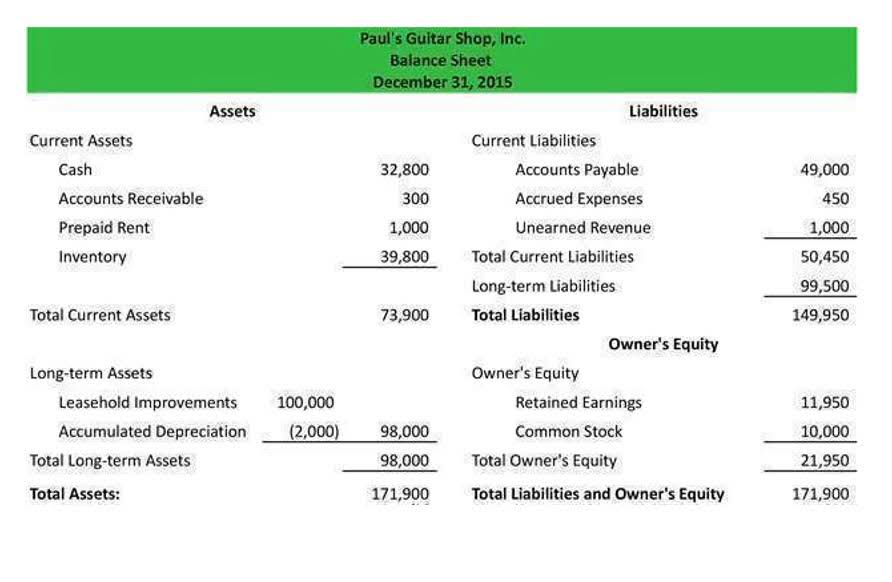
Journal entries are the very first recordings of the financial transactions of your startup. You’ll look more professional to clients, keep track of the business’s performance better, and ease the tax filing process. The owner’s equity is usually used by huge corporations to make decisions on dividend disbursements, company evaluations, and so on. This report differentiates revenues and expenses in order to see how much net income has been generated. That in turn, allows you to analyze how well your startup performed during that time period.
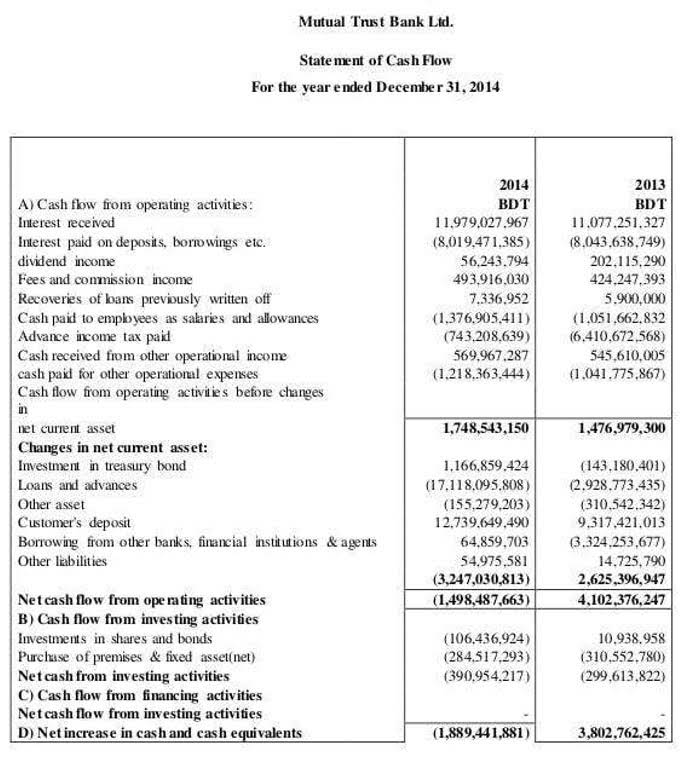
For the latter, determine their tax basis, which is their initial price or value to your business. Our experts track invoices, payments, and collections to maintain healthy working capital. With smart financial management, we make sure your startup accounting services for startups never faces financial gaps or payment delays. The cash flow statement records money entering and leaving the business.

QuickBooks accounting software makes tracking financial documents easy. On the platform, you can manage bills, track expenses, calculate tax deductions, assess project costs, view and manage inventory, and manage invoices and payments — all on one platform. Plus, QuickBooks makes it easy to integrate with your payroll and time-tracking software, giving you a holistic view of your business’s financial position and performance. The best rule of thumb for startup accounting is to hire a professional accountant to help you manage your business’s finances.

Founders can now rely on CPA experts to interpret data, file accurate returns, and prepare audit-ready statements. The company serves venture-backed companies in SaaS, eCommerce, HealthTech, and FinTech sectors. Their client base includes hundreds of startups that have raised over $1 billion in funding. They target well-capitalized businesses with products in-market or close to launch.
Outsourcing CPA services can be a game-changer for startups, providing expert financial management without the overhead costs of an in-house team. Considering the best outsource CPA services for startups can ensure accurate bookkeeping, robust https://www.theclintoncourier.net/2025/12/19/main-advantages-of-accounting-services-for-startups/ financial planning, and compliance with tax regulations. As a result, entrepreneurs can focus on core business activities and strategic growth. Bookkeeping involves recording all financial transactions, including sales, receipts, purchases, and payments, regularly. It’s advisable to designate a specific time, whether daily, weekly, or monthly, to ensure consistency and accuracy.
Each business transaction must be properly analyzed so that it can be correctly recorded in the journal. By performing these checks diligently, you help maintain accuracy in your financial reporting. An adjusted trial balance differs significantly from an unadjusted trial balance.
The accounting cycle is compatible with technology and can be implemented by companies using accrual or cash accounting and double or single-entry accounting. Other transactions or activities of the company indicated debit balances of $800 as Accounts Receivables and $100 inventory besides $600 cash debit. With the closure of the books, however, the bookkeepers and accountants repeat the accounting steps for the next accounting period.
The accounting software also automatically monitors and records payments from the company bank account. For most businesses, this is a continuous process since transactions occur regularly — often multiple times per day. A standardized accounting cycle also means regulators can more easily identify patterns or spot anomalies. The process standardizes how companies report their overall financial health and capture and record information about money spent and money earned. What makes the accounting cycle so important is that it provides consistency.
Accounting firms grew in the United States and Europe in the late nineteenth and early twentieth century, and through several mergers there were large international accounting firms by the mid-twentieth century. Many of these professional bodies offer education and training including qualification and administration for various accounting designations, such as certified public accountant (AICPA) and chartered accountant. This branch of accounting was first formally introduced in the March 1976 issue of The Journal of Accountancy. Forensic accounting is a specialty practice area of accounting that describes engagements that result from actual or anticipated disputes or litigation. Tax accounting in the United States concentrates on the preparation, analysis and presentation of tax payments and tax returns. Many accounting practices have been simplified with the help of accounting computer-based software.
Organizing financial data in a consistent, step-by-step manner helps businesses monitor performance and stay financially sound. By mastering these steps, you can improve efficiency, reduce errors, and maintain compliance with financial regulations. Common examples include loans, accounts payable, deferred expenses, and deferred tax liabilities. This blog will guide you through these rules and how they shape financial recording and reporting. By investing the time and resources to implement this process effectively, companies can position themselves for long-term growth, profitability, and financial stability. Prompt financial reporting is crucial for monitoring cash flow, identifying trends, and making strategic adjustments to operations.
The final step in the accounting cycle is when the company closes the books for the period. Step 7 of the accounting cycle involves preparing financial statements, which are essential in presenting the financial performance and position of a business. This step involves making adjusting journal entries to update account balances based on the analysis from step five. These adjustments ensure that all revenues and expenses are recorded in the correct accounting period, providing an accurate picture of the business’s financial status.
Items you can actually touch, such as cash, inventory, equipment, land or a building. For a breakdown on the differences between an accountant and a CPA, check out “Is a CPA the Same as an Accountant? Accountants can also work for themselves, setting up their own small business and freelancing their services out.
Accountants also provide other services, such as performing periodic audits or preparing ad-hoc management reports. Accountants help businesses maintain accurate and timely records of their finances. These rules specify how to record income, expenditures, assets, and losses, so that auditors have an objective view of the organization’s financial health. These rules are outlined by GAAP and IFRS, are required by public companies, and are mainly used by larger companies.
The goal is to ensure that the debits and credits are equal in the new trial balance. This allows you to make necessary adjustments before finalising financial statements. Correctly preparing an unadjusted trial balance helps you catch any discrepancies early. It is called an ‘unadjusted’ balance as, during this stage, the trial balance has not yet reflected any needed adjustments. This includes proper categorisation and documentation and checks and balances to catch errors.
The work performed by accountants is at the heart of modern financial markets. Because their reports are regularly scrutinized by oversight agencies, accountants are required to adhere to a uniform set of accounting standards. The difference between these two accounting methods is the treatment of accruals. Instead of recording a transaction when it occurs, the cash method stipulates a transaction should be recorded only when cash has been exchanged.
For the 11 remaining accounting periods in the year, there will be a $4,000 Debit to Rent Expense and a $4,000 Credit to Prepaid Rent. At the end of the monthly accounting period, however, the AJE would be $44,000 Debit to Prepaid Rent and $44,000 to Rent Expense. In this instance, the $500 cash sale would most likely be a $500 Debit to the company’s Cash account and a $500 Credit to the company’s Sales Revenue account. An organization must identify and capture every financial transaction into the accounting system.
When recording transactions, remember to keep them in chronological order and, if using double-entry accounting, which most businesses do, make two entries each time. The timing for recording transactions depends on whether the company uses accrual or cash accounting. This guide breaks down the accounting process into easy-to-follow steps that are repeatable every time a new accounting period begins. The accounting cycle is an eight-step guide to ensure the accuracy and conformity of financial statements. Most financial players confuse the accounting cycle and budget cycle as both deal with recording transactions. After properly rectifying the entries, the accountants prepare the financial statements and close the books for that particular accounting period.
Their main objective is to match incomes and expenses to the relevant accounting periods. At the end of the accounting period, adjusting entries must be posted to account for accruals and deferrals. In cash accounting, transactions are recorded based on when cash is paid or received. The bookkeeper will have a choice between cash accounting and accrual accounting depending on his company’s requirements. Point of sale technology can assist in combining steps 1 and 2, but companies might still have to track items like expenses separately. It provides a comprehensive guideline for recording, analyzing and reporting a business’ financial activities.
In addition, bookkeepers in companies use accounting software solutions to ensure the utmost accuracy of the process. An accounting cycle refers to culminating the accounting records for further analysis, letting internal stakeholders make well-informed and relevant financial decisions. A book keeper of company track all the process of accounting from the starting of transaction to closing of booking. Learn how to do a balance sheet with step-by-step instructions, examples, and analysis tips to understand your business’s financial health. Download free and customizable general ledger templates to streamline your accounting, track payments, and manage your business finances efficiently.
Automated accounting systems have made it more convenient and easier to keep track of financial records. The recorded journal financials now transfer to the ledger. Whether in a physical ledger or an accounting software program. This step involves recording all financial activities.
These might include unusual or significant reconciling items, missing or incorrectly calculated accruals or deferrals, or old outstanding balances that should be written off. This package should contain supporting accounting cycle steps explained schedules, reconciliations and notes for each balance sheet account total. All expense accounts will also be Credited with a corresponding Debit in Retained Earnings. Temporary accounts include all income, expense and withdrawal accounts.
In some cases, additional certifications, continuing education, or experience may be required for certain accounting-related positions or responsibilities. In addition, strong communication, time management, and ethical decision-making skills may be helpful for individuals pursuing accounting-related work. Success in the accounting profession often depends on a mix of technical and soft skills. In many cases, accounting curricula often emphasize developing analytical thinking, attention to detail, and familiarity with accounting software applications commonly used in the profession. Along with traditional coursework, certain programs incorporate assignments, case studies, or simulations that are designed to help students apply accounting principles in academic or hypothetical scenarios. Many accounting professionals also complete continuing education to maintain their credentials.
The sixth step is the preparation of the Adjusted Trial Balance, which is created after all adjusting entries have been posted to the General Ledger. The final common adjustment is for accrued expenses, which are expenses incurred in the current period but not yet paid or recorded, such as salaries or interest payable. The third type of adjustment is for accrued revenues, which represent revenues earned in the current period but not yet received in cash or recorded. The adjustment allocates the portion of the asset that was used up during the period to an expense account, like debiting Insurance Expense and crediting Prepaid Insurance. The crucial Matching Principle requires that revenues must be recognized in the period they are earned, and expenses must be recognized in the period they are incurred. The General Journal entry provides a complete record of the entire transaction in one place, including the date, the accounts, the amounts, and a brief description.